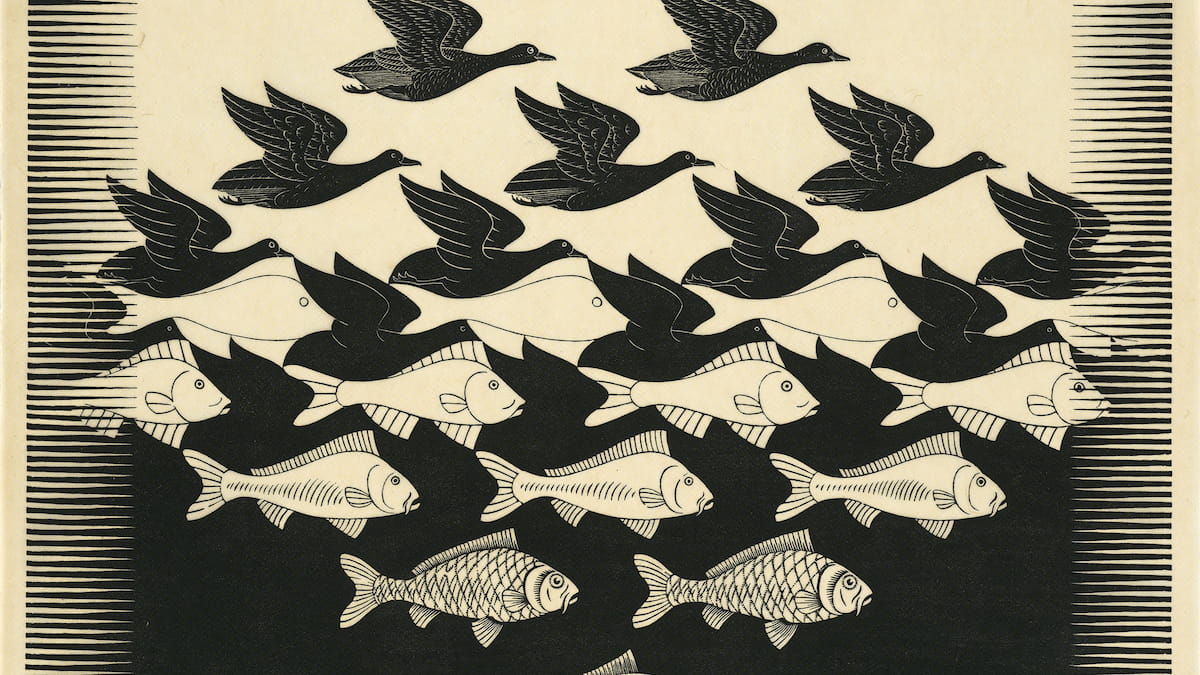
The Narrative Gap
When businesses experience a pivotal moment of change, it’s an exciting time. Maybe it’s a new product launch, entry into a new vertical, or a merger or acquisition. CEOs get giddy over the potential revenue growth, CMOs dream of being the newest cool kid on the block, and employees of all kinds imagine a bigger paycheck hitting their bank accounts and new titles on their business cards. The aura of endless possibilities is palpable. But, and you knew there was a but coming, it’s also a time of very high risk.
How will the market understand this new product or service? How will the internal team sell it? What will make consumers believe that your business is now this, no longer that? One of the most common mistakes businesses make, for example, is that when launching a new product they often jump to what the product is, rather than communicating why it exists. It happens all the time. This is an acute problem for B2B businesses, but it affects even the most consumer-facing brands, too. Now, that seems simple enough–make sure you tell the market why rather than what.
But this is a symptom of a much bigger, much more dangerous problem. It’s called The Narrative Gap, and it has the potential to not only stall momentum of a new product launch or entry into a new market, but it very often jeopardizes the business in its entirety. That’s because whenever a business experiences sudden growth or change there is not one, finite reason. It’s because the company itself has changed. This is what people need to know. It is vital.
Why, you ask? I’ll give you three reasons why.
- Clarity in the market
- Clarity with consumers
- Clarity within the company
It doesn’t take the most careful reader to see the common theme here. Clarity. That’s because confusion is the proverbial monster hiding under the bed for brands. Failure to achieve clarity can be disastrous.
In the late 1990’s, Yahoo grew very rapidly. They were known as “the ultimate web portal”, helping people all over the world find information, businesses, products… anything on the web. They were huge and innovative and everyone knew what Yahoo was, and how it helped them. Then, Yahoo got into media, original content and other businesses. Regardless of whether this was a smart business move, Yahoo didn’t bother to change the narrative to anything people could understand as the business changed. Suddenly, their consumers–the entire market–didn’t know what they were anymore. Meanwhile, Google came onto the scene and completely took over Yahoo’s original, abandoned narrative by communicating that they were the business to “organize the world’s information and make it universally accessible and useful.” A position and a message they have stood by with perfect clarity for their entire existence. So much so that we say we are “Googling” something whenever we go to search on the web. And, well, Yahoo is all but dead and Google is… Google.
Most people don’t know this, but Kodak invented the world’s first digital camera in 1975. What might have happened if they channeled this innovation to change the narrative to be something of a “future of photography” message? We’ll never know, because they stuck with “film and prints.”
Conversely, here are a few companies that have done this very well:
When Slack first came onto the scene their narrative was pretty straightforward and well-aligned with their product–a messaging app. And that’s how people used it and understood it. But as Slack began to innovate new tools beyond messaging, and the business started to rapidly grow, they were quick to identify a need to evolve the narrative as well. Soon they adopted the narrative of “Where the Future Works.” It changed the public’s perception of what Slack was and the value of Slack as a business tool, not just a messaging app.
Airbnb was known as a couch-surfing app, where one could expect to stay in a room of a stranger’s home for a fraction of the cost of a hotel room. As they grew and the business model evolved to be more home-rental focused, Airbnb changed the narrative to focus on local experiences over simply a room. This culminated in a position of “Belong anywhere,” which they still use.
In 2009, Domino’s was looking to make a big change in their business by altering their entire product. By their own admission, their pizza was terrible so they campaigned to the public that they were changing everything about it. They changed their narrative, too. Instead of focusing on “30 minutes or less” type messaging, the narrative became about taste and quality. That position, that message, has been consistent ever since, and even more prominent now with their recent brand update, including the Dommmmmmmmino’s you see on their pizza boxes and recent ad campaigns. Now, Domino’s is in the consumers’ consideration set based on quality, not just cheap and fast.
Change requires change.
For the past 15 years or so, closing The Narrative Gap is what I’ve been doing and what my company, Masson, does today. We’ve built the entire business around it. I’m not even going to call this a shameless plug, because I believe so deeply in how important this work is to any business experiencing change, or getting ready to. Here’s what you need to ask yourself if your business is at a pivotal moment of change:
- Could a new employee explain what your company actually does?
- Could a customer explain why your new offering exists?
- Does your messaging reflect what the company has become?
- Do different departments describe the company differently?
- Would your website make sense to someone outside your industry?
If the answer to any of these questions is “no” or even “maybe” or “I’m not sure”, then your company is living in The Narrative Gap. It’s not where you want to be. Ask Yahoo.
Better yet, ask us. We’ll help you figure it out.